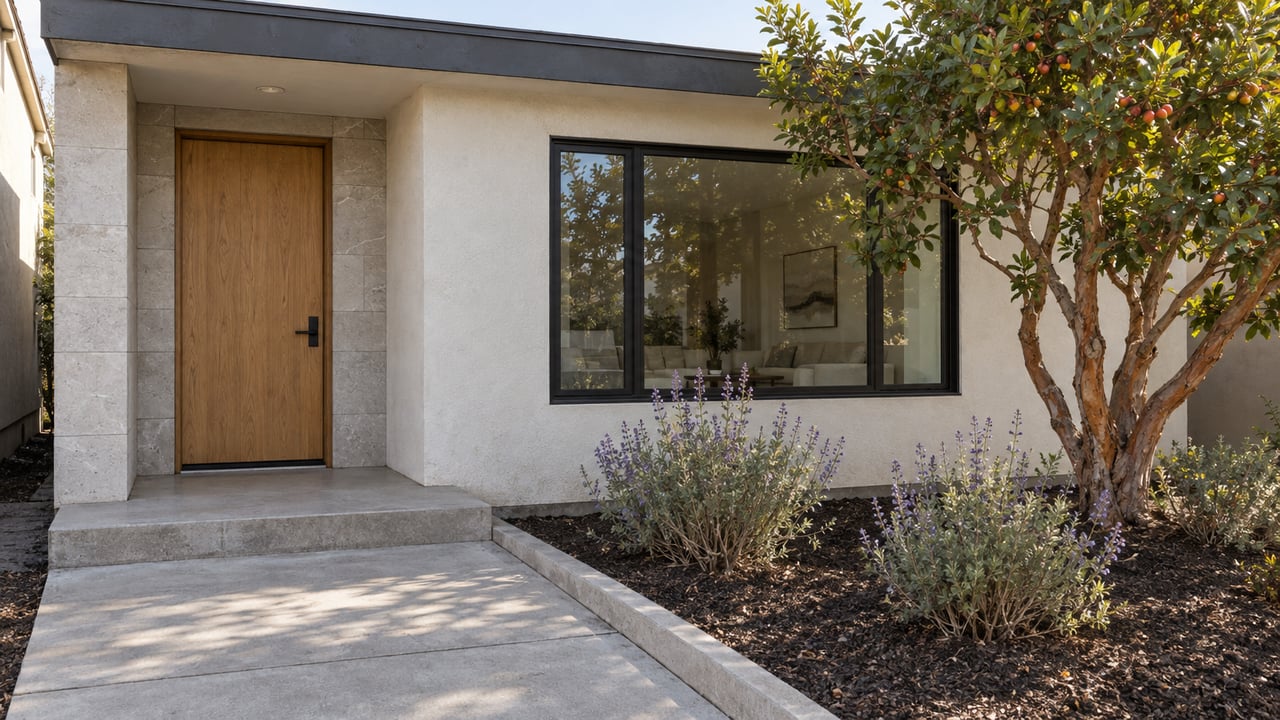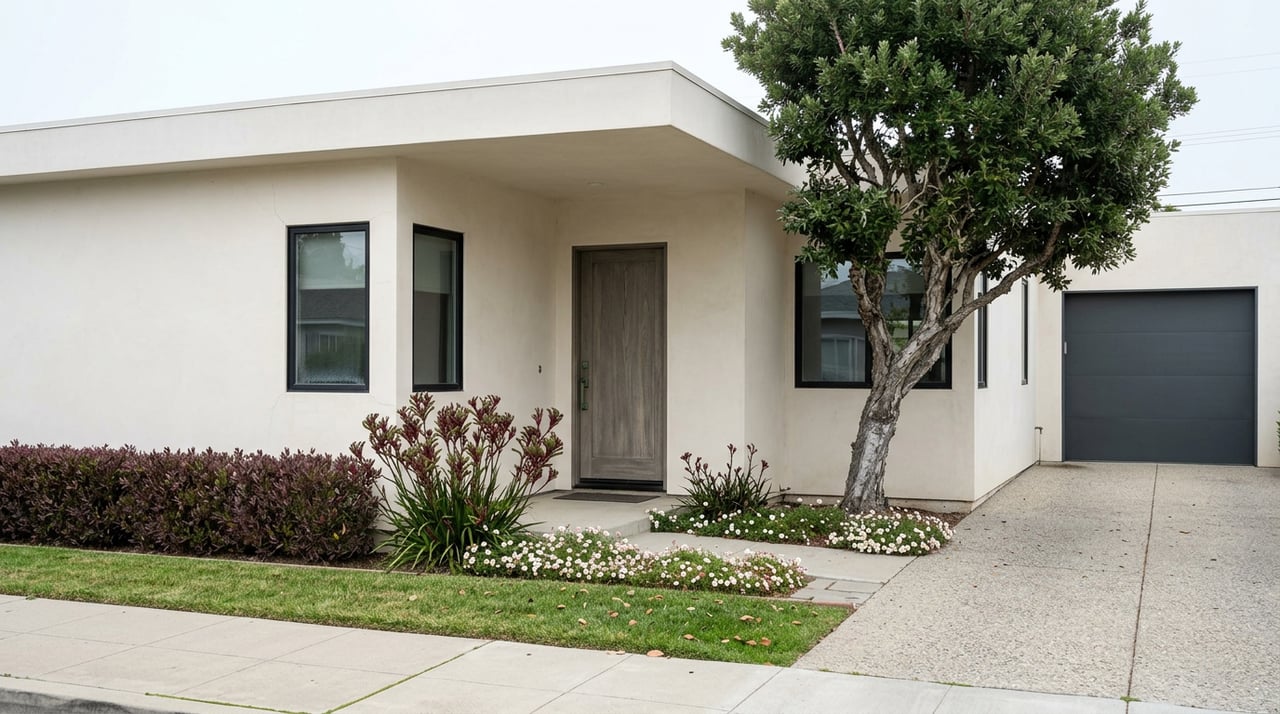
If you pulled the same three months of sales data for Redondo Beach houses and Redondo Beach condos, you would not guess they came from the same city. In the first quarter of 2026, single-family home prices in Redondo Beach rose 6.4% year over year to a median of $1.7 million. Condo prices in the same city, over the same three months, fell 10.7% to a median of $1.2 million, according to PropertyShark's market data.
That is not two neighborhoods drifting apart over years. It is one city, one quarter, two directions. The blended median for all of Redondo Beach came in at $1.5 million, up a modest 1.7% year over year, on 127 total sales. A single overall number like that hides the split entirely. The split also invites a closer look at Redondo Beach's waterfront and the projects there.
Same Quarter, Two Different Markets
| Segment | Q1 2026 Median | Year-over-Year |
|---|---|---|
| All Redondo Beach homes | $1.5M | +1.7% |
| Single-family houses | $1.7M | +6.4% |
| Condos | $1.2M | -10.7% |
| Los Angeles County (all homes) | $870K | reference point |
A quarter of data on 127 sales is not a large sample, and condo sales specifically make up a smaller slice of that number, so a single quarter's swing deserves some caution before anyone treats it as gospel. But the direction holds up against a second source. Redfin's trailing three months through May 2026 show Redondo Beach's overall median sale price at $1.6 million, down 1.6% year over year, with homes moving faster than a year ago, in about 30 days on market compared with 40 the prior year, and 175 homes sold in May 2026 versus 171 the year before. Zillow's home value index, which blends every property type into one number, shows the typical Redondo Beach home value down 4.5% over the past year. A blended figure pulled down while houses specifically gain ground is exactly what you would expect if condos are the ones losing value inside that blend.
Put together, the pattern reads less like random quarterly wobble and more like a structural split. Houses are being priced for land and neighborhood fundamentals that do not depend on anything happening down at the water. Condos, many of them within walking distance of King Harbor and the pier, are priced in part for proximity to an amenity that has been under construction, in litigation, or simply fenced off for years.
What's Actually Sitting on the Waterfront
One waterfront site relevant to this comparison is the former AES generating station. It occupies 51 acres of Redondo Beach's waterfront and stopped running around the end of 2020 once state rules phased out its use of ocean water for cooling. Since then, the site has sat largely as industrial hardscape behind a fence, a few blocks from the harbor that condo listings routinely feature in their marketing.
The city has been trying to turn a meaningful share of it into public land. Plans call for acquiring roughly 30 acres, made up of 25 acres from the AES parcel and an adjacent 5.29-acre parcel owned by Southern California Edison, with the goal of restoring coastal wetlands and adding public access. The state has already put money behind that goal. In November 2023, Assemblymember Al Muratsuchi announced an additional $5 million contribution toward the acquisition, bringing the state's total commitment to $15 million. That is real progress. The acquisition remains in progress nearly six years after the plant shut down.
The Waterfront's Ongoing Legal Disputes
The slower part of the story is legal, and it has been running since well before the plant closed. Developer Leo Pustilnikov, who holds interest in the AES property, submitted a builder's remedy proposal in 2023 for 2,700 residential units, a hotel, and 500,000 square feet of office space on the site. The city has repeatedly found his applications for the property incomplete, doing so at least twice in 2023 alone. That standoff produced a string of lawsuits, six in total by the most recent count, spanning the power plant site itself, a separate residential proposal across Harbor Drive behind the former S.E.A. Lab building, and a bankruptcy case tied to a 2020 option agreement that would have reserved part of the site for parkland.
In March 2025, a Los Angeles Superior Court judge ruled that approving a neighboring waterfront development would violate the California Coastal Act, a decision that then paused two of Pustilnikov's related suits pending appeal. A year later, in March 2026, one of the six suits was finally resolved: Pustilnikov agreed to dismiss a $120 million claim alleging the city violated his equal protection and due process rights by zoning the property in a way that prevented any economically viable use. Five more lawsuits, in various stages, remain in play.
Measure C became another chapter in Redondo Beach's waterfront development history. In 2017, voters passed Measure C with 57.1% support, capping the scale of development allowed on city waterfront land and effectively killing a $400 million retail and entertainment project the developer, CenterCal Properties, had already broken ground planning. CenterCal sued for breach of contract. The case continued for six years before the city settled in 2023 for $2 million, a fraction of what CenterCal had originally sought.
"Even if it doesn't look like it, we're going in a positive direction," Mayor Bill Brand told the Daily Breeze, as reported by The Real Deal.
For a condo buyer weighing a unit's proximity to the harbor today, the city's waterfront plans and their current status may be relevant context.
Planning for Pier and Parking Structure Upgrades
Litigation over the power plant is only half of what is unresolved down there. The Redondo Beach Pier's current concrete deck dates to a 1995 rebuild, put up after the previous wooden pier burned to the waterline in a 1988 electrical fire. Three decades of coastal exposure later, the city's own study estimates that necessary upgrades to the pier and its adjacent parking structure could cost more than $100 million.
The city's strategic planning matrix for the period running from June 2025 through March 2026 lists, as a formal objective under its Waterfront and Economic Development goals, investigating the options and costs associated with improving the Pier Parking Structure to allow for redevelopment, with a target date of March 1, 2026. One privately floated concept, published by architecture firm Envirotecture under the name "The Waterfront," proposes funding those repairs through private investment rather than taxpayer dollars, paired with a revitalized Seaside Lagoon and a new public market. It is a proposal, not an approved or funded project.
Other Development Projects in Redondo Beach
Several other development projects are moving forward in Redondo Beach:
- Legado Redondo, a mixed-use project with apartments, a hotel, and retail, is rising at the corner of Pacific Coast Highway and Palos Verdes Boulevard.
- The South Bay Galleria has entitlements for a redevelopment that includes a hotel, apartments, and offices.
- Catalina Village, a 32-unit build-to-rent project near Veteran's Park and Czuleger Park, secured full entitlement approval in the second quarter of 2023 and had targeted permit-ready status in early 2026.
These projects are separate from the AES and pier matters discussed above. The lawsuits described above concern waterfront development proposals.
What This Means If You're Comparing Redondo to Manhattan or Hermosa
Redondo Beach is routinely framed as the value option among the Beach Cities, and the comparison to Manhattan Beach and Hermosa Beach holds up when you look at what a dollar buys there versus here. The AES site and pier plans are additional context when comparing the Beach Cities. The waterfront's plans and timelines are another factor buyers may weigh, and they may matter differently across property types.
If you are shopping for a single-family house, the Q1 2026 numbers suggest the waterfront's timeline matters less to your purchase than the fundamentals of the lot and the neighborhood. If you are shopping for a condo, especially one marketed on its walk to the harbor or the pier, it is worth asking what that proximity is actually buying you today versus what it is betting on for later. Before writing an offer near the waterfront, a few questions are worth asking directly:
- How many of the comparable sales your agent is using are houses versus condos, since the two have been moving in opposite directions in the same city.
- What the unit's current outlook actually includes today, since the AES site's future use remains undetermined.
- Whether the building's HOA has discussed any costs tied to nearby public infrastructure work, given that the pier parking structure's redevelopment options were listed as a planning item through March 2026.
- Whether any advertised waterfront revitalization plan you've read about is entitled and funded, or is still a concept proposal.
A Few Questions Before You Compare Cities
Is the AES site guaranteed to become a park? Not yet. The state has committed $15 million as of late 2023 toward acquiring roughly 30 acres for wetlands restoration and public access, but five more lawsuits involving the site's developer remain in play following the March 2026 partial settlement, and no fixed completion timeline exists.
Does Measure C mean nothing can ever be built on the waterfront? No. It limits the scale of development the city can approve on its waterfront land, which is what stopped CenterCal's $400 million retail project in 2017. Smaller, privately funded concepts, including the one architecture firm Envirotecture has published under the name "The Waterfront," have since been proposed under that cap, though none has broken ground.
Why did houses and condos move in opposite directions in the same quarter? Partly sample size, since Q1 2026 reflects 127 total sales across the whole city. But the same pattern shows up in Zillow's blended home value index, which is down over the past year even as house-specific data shows gains, which is consistent with condos pulling the blended number down rather than the split being a one-quarter fluke.
Redondo Beach's fundamentals, its schools, its harbor, its walk to the sand, have not changed. The Q1 figures highlight differences between the house and condo segments, while waterfront plans remain one factor condo buyers may consider. That distinction is the kind of detail worth having an advocate walk through with you before you decide which side of that split your offer belongs on.
If you are weighing a house or a condo in Redondo Beach, or comparing it against Manhattan Beach or Hermosa Beach, Tim Meza can walk through what the current split actually means for the specific property you're considering. Schedule a consultation to talk through the numbers before you write an offer.
This article is general information, not legal, tax or financial advice. Consult a qualified professional about your situation.