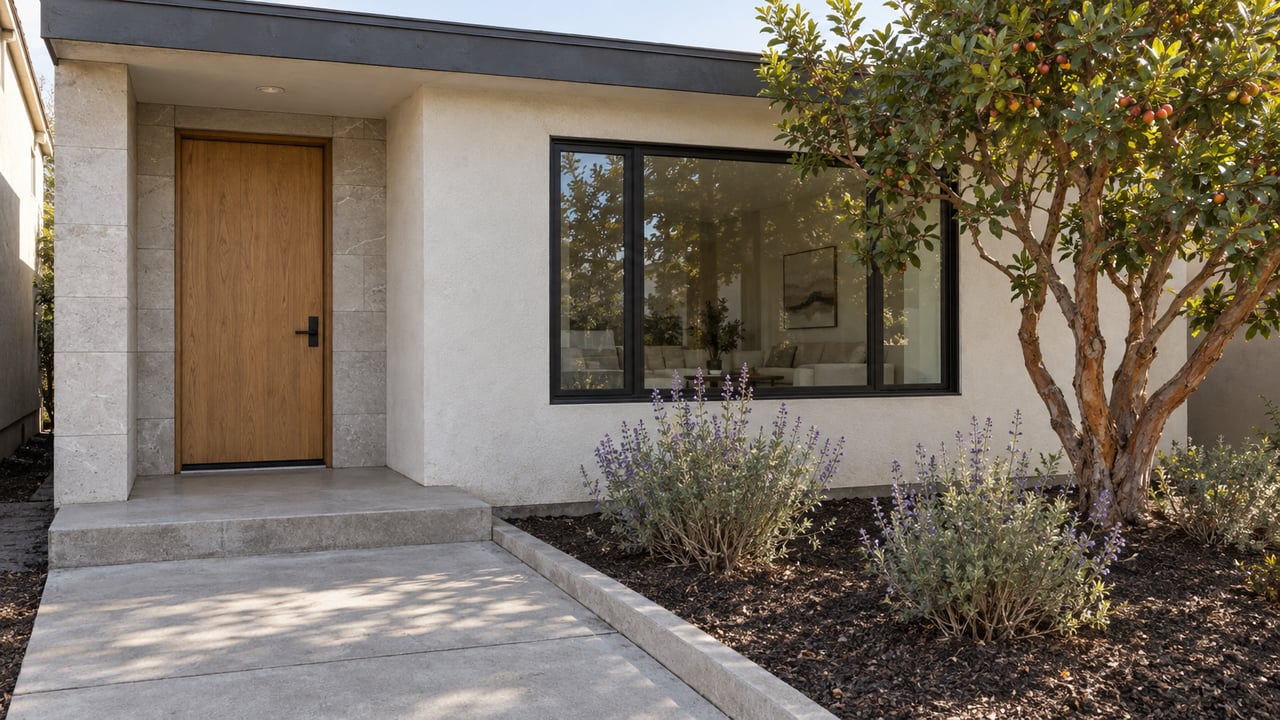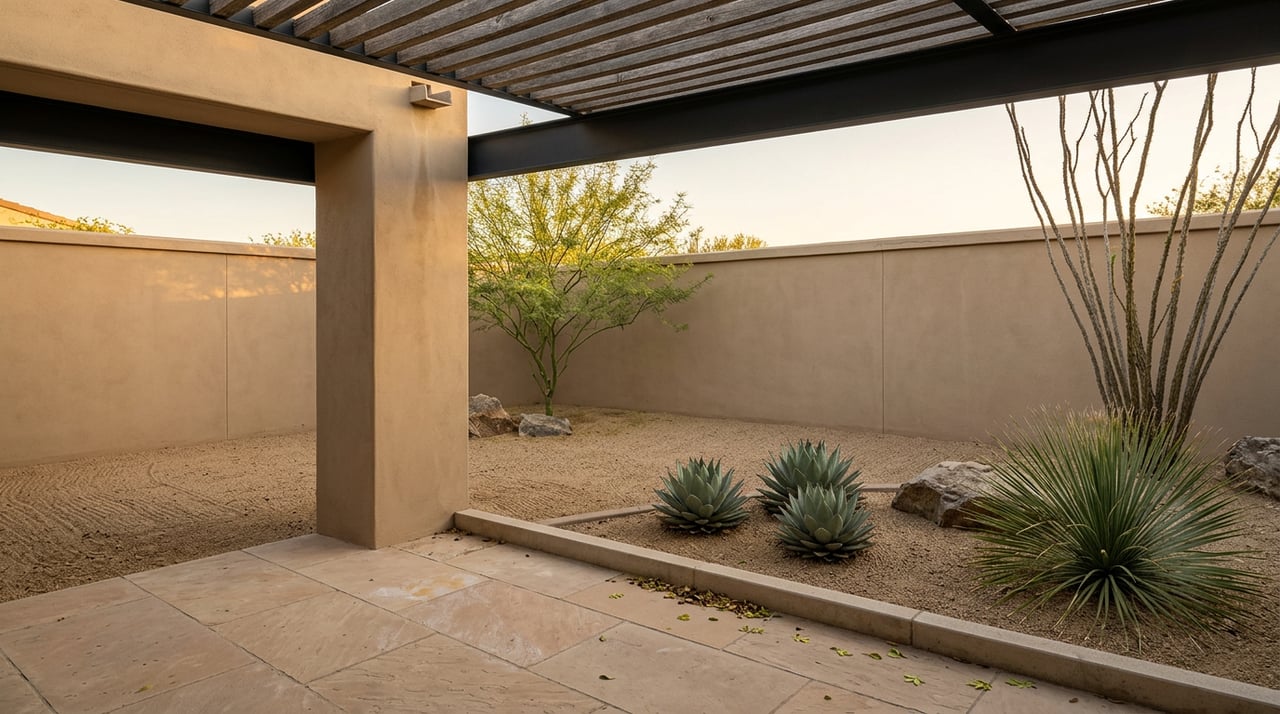
Two Palm Desert homes can carry nearly identical price tags and completely different second monthly payments. One buyer's association dues run under fifty dollars a month. The buyer closing three streets over signs up for a $250,000 golf club initiation fee due before the moving truck arrives, then another few thousand dollars a month in club charges after that. Neither figure shows up on the price sheet. Neither moves the city's median sale price, which sat at $605,000 over the three months ending May 2026. Both numbers live in a document most buyers don't think to ask for until an agent hands it over: the HOA resale packet.
This is the part of Palm Desert real estate that median-price coverage skips entirely. The city isn't one market. It's a patchwork of separate homeowner associations, and inside many of them, a second, entirely independent business, the country club, layers its own dues and entry fees on top. Understanding which structure you're buying into matters more than the sale price itself.
Two Governing Bodies, One Listing Sheet
Every Palm Desert HOA operates under California's Common Interest Development law, generally known as the Davis-Stirling Act, which covers common-area landscaping, gate operations, reserve funding, and the disclosure paperwork a seller has to hand over. That's one governing body, and it's the one most buyers picture when they hear "HOA."
The country club, where one exists, is a different animal. It runs the golf course, the clubhouse, the tennis and pickleball programs, and the dining room, often as a members-only business with its own bylaws, its own initiation fee, and its own monthly dues. Whether you're required to join is written into the community's CC&Rs, not into the MLS listing.
The gap between those two models is the thesis of this whole piece.
What the Same City Actually Charges
| Community | Monthly HOA | Club Membership Terms | Initiation Fee | Ongoing Club Dues |
|---|---|---|---|---|
| Palm Desert Country Club Association | Under $50 (single-family) | Check the CC&Rs | None | None |
| Portola Country Club (55+) | $455, golf included | No separate club | None | None |
| Palm Valley Country Club | $893 | Check the CC&Rs | None | $11,220 a year |
| Bighorn Golf Club | $1,150 | Check the CC&Rs | $250,000 | $39,000 a year |
The Palm Desert Country Club Association, formerly known as Palm City Association, has operated its own clubhouse and recreational facilities for residents since 1961, and its low dues reflect a community built around an adjacent public course. Portola bundles golf directly into its HOA charge, so there's no second bill to track. Palm Valley and Bighorn sit at the opposite end, where the entry fee alone can exceed a third of the city's median home price before a single monthly bill arrives.
Ironwood Country Club, opened in 1973, publishes a similar structure on its own terms: a $29,500 golf membership initiation and $1,085 a month in golf dues, on top of whatever the association itself charges. None of that appears in a home's list price. All of it appears in your first year of ownership.
What a Ten-Year Hold Actually Costs
The initiation fee is the number that trips people up, because it reads like a one-time closing cost when it actually functions like a second mortgage payment spread over however long you plan to stay. Here's the arithmetic using Bighorn's published figures.
- Take the $250,000 initiation fee and divide it by your expected years of ownership. At a ten-year hold, that's $25,000 a year, or a little over $2,080 a month, before a single round of golf.
- Add Bighorn's published $39,000 in annual golf dues, roughly another $3,250 a month.
- Add the $1,150 monthly HOA charge.
- The total lands near $6,480 a month in association and club costs alone, before mortgage, property tax, insurance, or utilities.
Run the same math on Palm Valley and the number drops to roughly $1,828 a month, with no initiation fee to amortize at all. Portola holds steady at $455 flat. The Palm Desert Country Club Association sits under $50. Four communities, one city, a monthly spread of more than $6,400 that a median sale price will never surface.
One more thing worth confirming before you assume any of this saves you at tax time: club dues and initiation fees carry their own treatment depending on how the property is used. A CPA who works with Coachella Valley owners can walk through the specifics for your situation.
The Permission You Need Isn't Always the One You Think
Buyers eyeing Palm Desert as an income property run into a second layer that operates independently of the fee structure entirely: who's allowed to rent, and for how long.
The city regulates short-term rentals under Municipal Code Chapter 5.10, which requires a permit, transient occupancy registration, and an operator who's reachable around the clock and able to respond to a complaint within thirty minutes. The ordinance also includes a hard deadline worth knowing if you're looking at a property in one legacy category: existing off-site short-term rental permits in the HPR zone are set to terminate entirely by December 31, 2026, with no new permits issued after a revocation in that zone.
Clearing the city's permit doesn't automatically clear the HOA's. Associations retain the authority to restrict or prohibit short-term rentals through their own governing documents regardless of what the city allows, and most already have language written to that effect. For Palm Desert Resort Country Club, known locally as the Resorter, confirm the specific building's CC&Rs before counting on short-term rental income. A community can look identical to its neighbor on paper and land on opposite sides of this question.
What to Request Before You Write an Offer
The information that would have told you all of this upfront exists. It's called the resale or estoppel packet, and California law requires the seller's association to produce it. Before you're deep into escrow, ask for:
- The current CC&Rs, bylaws, and the association's most recent budget
- The latest reserve study, so you know whether major repairs are funded or pending
- Twelve months of board meeting minutes and any pending special assessments
- Sub-association budgets, if the community has more than one governing layer
- Written confirmation of the club membership status attached to that specific unit, mandatory or optional, along with the current initiation fee and dues
- If you're planning to rent the property, written confirmation that both the CC&Rs and the city's permit rules allow it
Some associations make this easy. The Palm Desert Country Club Association posts its annual budget package publicly on its own site, which is the kind of transparency that lets a buyer do this homework before ever touring a home. Not every community makes it that simple, which is exactly why asking early, rather than assuming the HOA line item tells the whole story, is the habit worth building.
A Few Questions Before You Tour
Is the golf club membership always mandatory if a home sits on the course? Check the community's governing documents to confirm whether membership is required.
Can I negotiate the initiation fee? That depends entirely on the club's own rules, not the seller's. Some clubs allow a membership to transfer with the sale at a reduced or waived fee under specific conditions. Ask the club directly, not just the listing agent, since the HOA and the club are often separate entities with separate answers.
Does a low HOA fee mean I'm getting a better deal? Not by itself. A low HOA paired with a mandatory high-dues club can cost more monthly than a higher HOA with no club attached at all. The full picture only shows up once you add both numbers together.
The median price got you in the door. The resale packet tells you what you're actually signing up to pay every month after that. If you're weighing a Palm Desert purchase against other California options, or want a second set of eyes on what a specific community's numbers actually mean for your budget, Tim Meza is glad to walk through it with you. Schedule a consultation before you tour, not after you've fallen for a view.
This article is general information, not legal, tax or financial advice. Consult a qualified professional about your situation.